
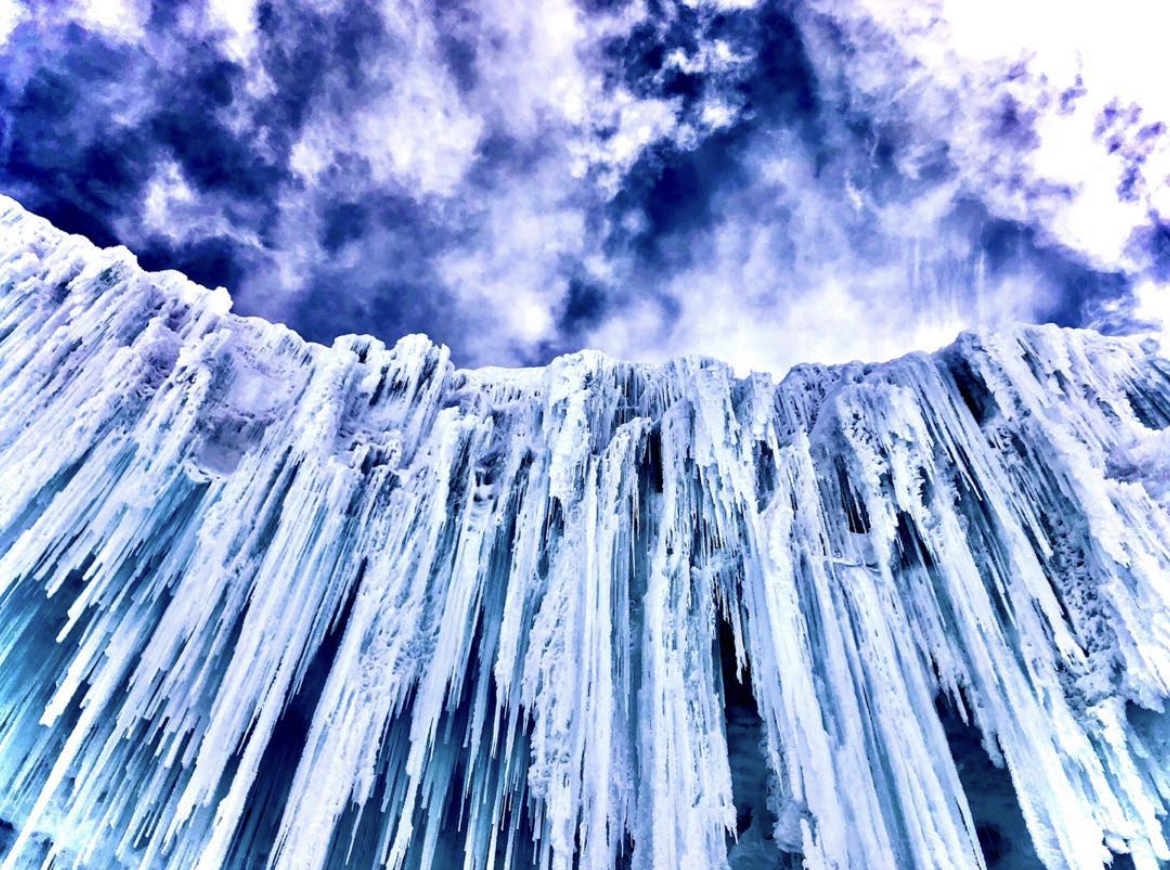
Ixtaccihautl 2016: A Gringo Comes to Worship
January 24, 2016
I met Rick for the first time at gate 53 of Hartsfield-Jackson Airport about an hour prior to our flight into Benito Juarez International airport in Mexico City. Rick was good enough to fly to Atlanta to connect so we could fly together.
A good looking sales executive from Clarkston, Michigan, Rick knew Juan Gabriel from his old parish outside of Detroit. As is consistent with people from the Great Lakes, one finds it easy to become quick friends. But if I am the world’s greatest gringo, Rick is the world’s best tourist, being inquisitive by nature, his questions never cease. But questions in a foreign land come easier than answers. We developed a habit of asking street vendors how much for a souvenir, expecting an answer in English, then ask again ‘how much?” as if the vendor would be able to provide the answer if we would just repeat the question slower. We would laugh at ourselves. The vendor, not having understood a single thing we said was ultimately happy to have laughing consumers who couldn’t count pesos.
Española is a beautiful language that rolls off a vibrating tongue with the consistency of a well-oiled sewing machine. The only way to really understand it is to hope that you can communicate one word at a time and in fact this method worked well several times. In fact, I was able to effectively communicate knowing only three phrases: Bueno, gracias, and por favor can get you far in a city of 20 million. Half the population is self-employed and run curbside food markets with their brothers, sons and daughters sent to stand in the middle of moving traffic and hawk genuine Mexican souvenirs made in China, no doubt a striking benefit from the North American Free Trade Agreement. But this is 2016, and Mexico City has a rising middle technology class making it a financial center poised for an economic future through its geological center between the established North American Markets and the emerging South American trade zones. The airport is spotless, the authorities well-mannered and uniformed and the middle class working men are expected to wear ties at work. My first impression was in contrast to my expectation of chickens on the runway.
We landed at 3:30. The sun was out, humidity low and the airport crowded, but working efficiently. After we picked up our packs and headed to customs, they seized my two ham, turkey and cheese sandwiches that I declared on immigration forms handed out by the flight attendants. Far more people speak English in Mexico than gringos speak Spanish in the United States with the exception of Mexican Customs agents, none of whom speak English. I was forced to unload my pack and explain where I was traveling. I could not help but be concerned that I would be imprisoned in a desert jail with nothing in the cell but an old bandito lifer and a small drain in the center used for a community toilet, all for attempting to smuggle boar’s heads meats into Mexico.
After using sign language to explain “boars head” which did not work out too well, I was able comprende’ that she was asking for my destination.
Ixtaccihautl, I said, which drew even more concern. “You know, alpinismo? I climb large mountain outside city.” I went into a pantomime of an erupting volcano and a man climbing to the top, which appeared to have been understood, or at least having been satisfied with seizing my sandwiches, the customs official finally gave in and I was eventually able to win my freedom.
We met father Juan outside of customs. I felt reassured about traveling with a priest in a catholic country until he told us about the last time he was home, when he was detained by some sort of police agency and held for pay out, also known as bail in the United States. Unfortunately for the policia, detaining a priest with the mental toughness of a veteran mountaineer and the iron will of a man of God, a spiritual mater, is an exercise in fruition. An L.C. is a Legionnaire of Christ, a conservative, catholic order that continues the cause. The order’s vow is absolute allegiance to Jesus Christo. He owns nothing and is able to keep nothing, as most material possessions are considered inessential toys, unnecessary in absolute spiritual devotion. Legionnaires are somewhat recognizable by most Catholics. Unlike many modern priests, they wear traditional black, every day, with the exception of casual attire in the form of kaki pants and a white cotton shirt, which I’ve noticed is consistent throughout the brotherhood. The only time I have not seen Juan in uniform is while climbing. Even the United States funded Mexican federal police are no match for a man of Juan’s spiritual commitment. After learning that he would probably be just as comfortable saying daily mass even after being imprisoned in a small desert jail cell with a congregation of bandito sinners and a drain, the federal’s decided to let him go.
Mexico City is a fascinating and unique combination of ancient streets and modern highways. It is the largest metropolitan area in the western hemisphere and the largest Spanish speaking city in the world. At an average elevation 7,356 feet above sea level, about 21.2 million people in the Mexico basin live at an elevation seven hundred feet higher than the highest point east of the Mississippi, Mount Mitchell, North Carolina at 6,684 feet. Centered in the Valley of Mexico, the metro area would be geographically considered as sitting in a large mesa or plateau. The entire city proper is surrounded by the lower third of the Trans-Mexican Volcanic belt. A series of volcanic peaks that encircle the Mexico Valley to the south by the Sierra de le Cruces Mountains and the North by the Sierra de Guadalupe and Catarina ranges. When one looks at google earth images, you can see that this is the same volcanic belt pattern as that of Rainier, St. Helens and the Cascades. The surrounding mountains of Mexico City have several peaks over 5,000 meters or 16,404 feet, two thousand, and two hundred feet higher than Rainier and two thousand higher than Mount Whitney, the highest mountain in the continental United States.
Founded by the Mexica, a nomadic group of rural gypsy mystics who wandered the country around the fringes of the warrior class Aztec empire, the City is almost seven hundred years old. According to Aztec glyphs, the Mexica, an uncommonly monotheistic Nahautl tribe, searched for seven years at the direction of God, Huitzilopochtli, until the tribal shaman came upon an island in completely still, shallow, saline water, where he saw a tall tree bearing an eagle with a blue snake in its claws. These thoughts could only reinforce the idea that once again I was on more than a climb, but an experience of climbing into another culture.
But reality is reality and I found myself staring out the window of our van at the human masses of a different culture, destination unknown, in a congested city with no designated traffic lanes, being driven by hired a driver that speaks no English, accompanied by a catholic spiritual master and a fifty two year old sales executive from Michigan who loves to ask questions. But the 1930’s poet climber Rene Dumal had it right, one who has been to the summit knows the way of conducting oneself in the lower regions by what one has seen up top. And thus it is with my fellow searchers that our first stop was the Basilica of Our Lady of Guadalupe for mass, which is not a bad idea for a fifty year old criminal defense lawyer and shameless wanderer from the Atlanta suburbs who finds himself taking on the fascinating but sometimes dangerous world of high altitude mountaineering at the age of 49.

https://www.instagram.com/p/B76K3fyBsJP/?utm_medium=copy_link
Ixtaccihautl 2016: Pilgrimage to Our Lady
January 12, 2016
La’s phone rang late on a October Saturday afternoon as I was standing in the kitchen. I have a habit of wanting to be near the nucleus of the fam on Saturdays, especially late in the fall, with a game on, encircled by endless female energy of pre teen kids and modern technology. Has football changed or have i? I’ve not been able to sit and watch TV for more than an hour since returning from the Expedition Skills seminar at Rainier In September. I feel as if life is flying by at sea level while I sit on my couch which forces me to walk incessantly into the kitchen.
It was father Juan, the ironman priest and adventurer, calling from his new assignment in Sandy Springs. I knew before answering that he would offer a challenge that I had promised La I would never accept again since being pulled out of a crevasse, on purpose of course. Mexico came in my dreams the night prior.
Juan is a one of the holiest men I know; a selfless advocate for the poor, especially our Latino congregation. He is also a fearless climber with the spiritual connection to the present moment that comes easiest at 14,000 feet.
“Elo Dom, this is Father Juan. We are climbing ixtaccihautl in January, need one more, you are going.”
“Umm, ok, ” I said, “but I promised Lori I was done. But wait, she is shaking her head, I have to check with her.”
A month prior to the phone call I was on Rainier staring at the void above Disappointment Cleaver, 13,000 feet, at 4.30 a.m., tied to Brent Okida, a senior guide with RMI and a gymnastic climber who had been dragging me up the cleaver like he was running from the bulls of Pamplona. I had spent two sleepless nights in a one room hut at 10,000 ft camp Muir with 12 people I had never met and two from our 2014 summit, Denali Dawn and Farmer Dave both of whom agree that just one summit was not enough. Sometime after our 2014 climb, I was gripped with summit fever. It inches into ones head space every day, like a wave that slowly gains momentum, rising high just before it crashes into a beach. Symptoms include incessant conversation about the big mountains, obsession with questions such as why they call K2 the “savage” mountain, and a strange fascination with online outdoor retailers-those crampons look awesome. Which of course begs the question of who needs crampons in Atlanta, Georgia or the twisted logic that compels one to want to actually learn expedition climbing as opposed to the quick and relentless Alpine ascent.
Thus my compulsion to learn everything possible about this small circle of people who are drawn to a life of Sherpa. After all, as Hunter Thompson said, “when the going gets weird, the weird turn pro.” We were being schooled in mountaineering principles of knot tying, equipment usage, safety protocol, avalanche and crevasse rescue, self extrication and how to read a glacier. Invaluable lessons from the pros, especially when venturing above 14,000 feet in a foreign country, even though I had no plans to venture beyond the glaciated peaks of the Great Republic of Cascadia.
The pros were our guides from RMI, Mike King from 2014, Brent and 3 incredibly strong women, Bridgette, Christina and Megan, all of whom cashed in their chips in exchange of summers climbing and winters on back country ski patrol. The strongest and perhaps the most talented of the climbers was Christina, a tall, fair skinned woman with an exceptional smile and a countenance for humor at altitudes where it takes the brain a few minutes to comprehend. We were two days into the seminar when she was dispatched by Brent from Muir at 3:00 a.m. to cut a new route to the summit. Rainier in September can be temperamental. The summer was extremely dry, but September brought 7 straight days of new snow fall on the dry rock. The last five teams had to turn back above Disappointment Cleaver due to avalanche probability and high winds. On the way up, Chris met with two independent climbers from Alaska, real die hard sourdough types. The kind you read about in a Londonesque Krakauer book. Together, the three of them set anchors, fixed ropes and laddered newly formed crevasses amidst ice and rock fall, which alarmed us at Camp Muir more than a few times. It is a fascinating world on the slopes of a glaciated peak. One can hear an avalanche or rock fall, but can’t always see it, which only adds to the intrigue. Rock starts out with a loud crack, like lightning, then a heavy tumbling sound, like a bulldozer tumbling end over end. Ice is more like the roar of a echoing grizzly bear. They say the best way to avoid an ice or snow avalanche is to stay out of its gravitational field or where you believe it will end up, “the fall.” Rock is different because of the non spherical shape of the shale. We learned that to survive a rock fall, one stays in place until the last opportunity to dodge right or left as directed by a climbing partner who has a line of vision, like trying dodge an 80 pound football traveling at 70 miles per hour.
Christina pulled into camp late the next afternoon declaring that we had a route to the summit. I was amazed at this athlete, smiling after an 8 hour ascent, many times hanging off the mountain, a true master of physical geometry, which figures large in setting ice anchors. At one point we were required to cross a 12-15 foot ice bridge, over a crevasse on each side on the Cowlitz Glacier en route to our training snow field. I was part of Megan’s rope team, the last of nineteen people in front of me with an athletic kid from San Francisco I came to call Cool Mike who throughout our stay was Steve McQueen quiet, as the last man. Behind him was Christina on the anchor. As each climber crossed the bridge, it wore thinner and thinner, until I came and used up the last of the terra firma. As cool Mike approached, the flat bridge gave way and he started slipping off to the right when he reached up and grabbed a small patch of ice rising up the the left. Trust your crampons yelled Bridgette as we all watched in awe as Mike dug into what was quickly becoming an ice wall and pulled himself up right. I stood motionless, with ice axe in hand, ready to self arrest should Mike pull me into the crevasse with him, just as I had been taught, but slowly he regained his footing and walked up over onto the edge of the crevasse resting firmly on my side.
Later that evening as I sat in contemplation of “what ifs,” I caught Christina and asked her what she would have done. “Simple” she said, “I would have jumped into the left side, thus creating a lever using the last of the ice bridge as a fulcrum.” I am to this day amazed at her presence of mind to think of jumping into a crevasse and rely upon our team to rescue both her and cool Mike. But then again, it takes presence of mind to ski down a peak, as she would know, being the first woman to ski down little Tahoma Peak.
But the banshee wails for those with the worst case of mountain fever. I left the seminar having been enriched mentally, physically and spiritually, but defeated as I turned around at my abyss 800 feet from the summit. The 2 nights without sleep found me exhausted to the point of hallucinations in the beam of light and disconnected signals between my mind and usually steady legs that were simply not getting the message. I became dizzy, which is not a good thing, especially on the descent. I felt that the spirits that inhabit these places were tall and dark over my body and mind, telling me to turn back.
Today, I truly believe that I would have dishonored the Mountaineers code of ethics that has kept the best alive and for which I had spent the week being taught if I had continued. Although denied by body and mind, I learned the most important lesson in high altitudes: climbing beyond your means can be disastrous. Ethics in this world translate to survival, physically and spiritually. Even the most logical mountaineers pay homage to the metaphysical shamans and seers who believe the mountain is an honorable deity or at least a force for where a spiritual current begins in this world. But when one knows the summit, one knows himself and mountain dreams die hard in the suburban lowlands where the greatest challenge to those who live on the couch is trying to figure out how to record the Bama game.
The beauty of living with a soulmate is clairvoyance. La knew father Juan’s question and knew my answer before my face told her, that I would ask her to climb again even if it was a Mexican volcano at 17,000 feet. I was absolutely ready to tell Juan I was out, but I guess La knows the game, that people drawn to high places can’t say no. Why? Because everything in life is impermanent anyway and there is never a finish line or a highest peak, only the boundaries of our own mind.

https://www.instagram.com/p/B73u9mDhuW7/?utm_medium=copy_link
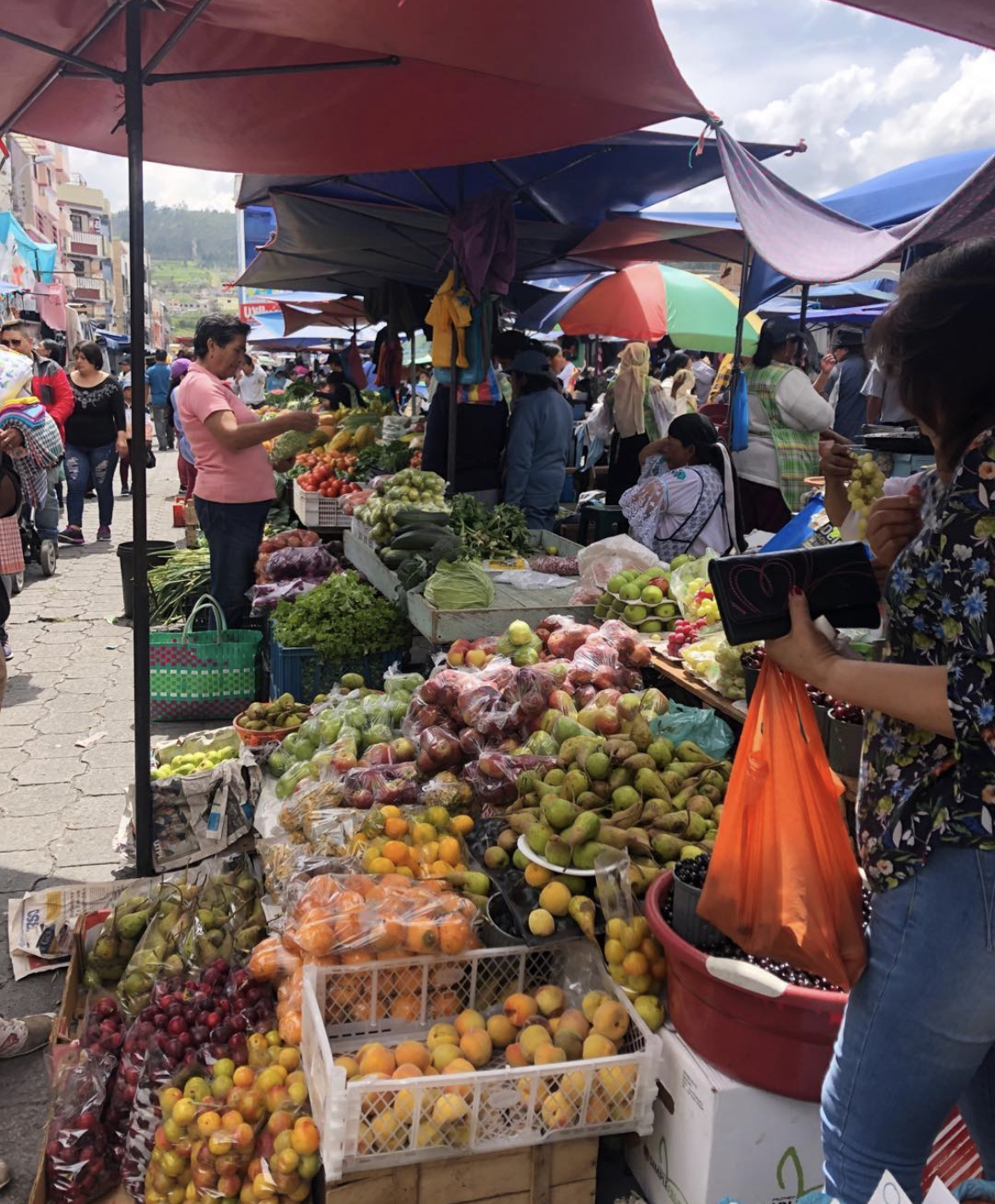
https://www.instagram.com/p/B7v__h5B1sv/?utm_medium=copy_link
 tomsalata.com